Most IRAS penalties come from avoidable errors, not deliberate evasion. A missed deadline, an under-declared side income, or a relief claimed twice can each turn a routine filing into a composition fine, an inflated estimated tax bill, or a court summons. The good news is that the same handful of mistakes account for the bulk of penalties, and every one of them is preventable.
This guide covers the errors that catch out both individuals and companies in Singapore, what each one costs, and how to file cleanly the first time.
Start with the deadline that applies to you
The single most common reason people pay a penalty is filing against the wrong date, or assuming there is more time than there actually is. Singapore runs several tax deadlines in parallel, and which ones apply to you depend on whether you file as an individual, run a company, or are registered for GST.
| Filing | Who it applies to | Deadline |
|---|---|---|
| Individual Income Tax (e-filing) | Employees, sole proprietors, partners | 18 April each year |
| Estimated Chargeable Income (ECI) | Most Singapore companies | Within 3 months of the financial year end |
| Form C-S / C-S (Lite) / C | All Singapore companies | 30 November each year |
| GST return (Form F5) | GST-registered businesses | 1 month after each accounting period |
For individuals, the filing window opens on 1 March and closes on 18 April, with no automatic extension, so the safest move is to diarise the date as soon as the season opens. IRAS publishes the current year’s dates and reminders on its Tax Season page, and a consolidated list of business filing dates on its Due Dates page. For a single view of every recurring obligation across the year, our Singapore company compliance calendar maps the filing dates that companies tend to miss.
Do you actually need to file?
A surprising number of penalties go to people who assumed they were exempt.
As a rule, you must file an individual income tax return if your total annual income is more than S$22,000, or if IRAS sends you a filing notification, regardless of how much you earn.
First-time filers, freelancers, and anyone who picked up side income during the year are the ones who most often get this wrong. If you received a letter, an SMS, or a notification to file, that obligation stands even if you believe you owe nothing. Ignoring it is itself an offence, not a saving.
Mistake 1: Assuming the No-Filing Service covers everything
If you receive a No-Filing Service (NFS) notification, it means IRAS already has your employment income through the Auto-Inclusion Scheme, and you may not need to file.
The trap is treating that notice as the end of your obligation. NFS only covers the income IRAS already knows about. Anything outside that, you remain responsible for declaring. Our step-by-step income tax filing guide walks through how to check and top up a pre-filled return.
- Income that is commonly left out includes the following:
- Rental income from a property you let out
- Freelance, commission, or side-gig earnings, including online and platform income
- Directors’ fees from a company you sit on the board of
- Income from a trade or profession run as a sole proprietor
Even when NFS applies, log in to myTax Portal, confirm the pre-filled figures are correct, add any income that is missing, and check your reliefs. A pre-filled return is a starting point, not a finished one.
Mistake 2: Under-declaring income or over-claiming reliefs

This mistake runs in two directions, and IRAS catches both through data matching against employers, banks, and other agencies.
On one side, taxpayers leave out income they assume is too small or too informal to matter. On the other hand, they claim reliefs they are not entitled to, which lowers the bill in a way that does not hold up to a query.
Personal income tax reliefs are capped at a combined total of S$80,000 per Year of Assessment, so claims beyond that ceiling have no effect anyway. Within it, the errors that come up most often are these:
- Parent Relief claimed on the same parent by more than one sibling
- Spouse Relief claimed when the spouse’s annual income exceeds the S$8,000 threshold (raised from S$4,000 in YA 2025)
- Course fee relief claimed for courses that do not meet the qualifying conditions
- Child Relief was claimed without meeting the income or residency criteria
When the figures do not reconcile, IRAS raises an additional assessment and can impose a penalty on the under-charged tax. The discipline is simple: declare every dollar of income, and claim only the reliefs you can support with documents.
Mistake 3: Companies forgetting their ECI
Estimated Chargeable Income is due within 3 months of a company’s financial year end, and it is the deadline new business owners forget most often because it falls long before the November corporate tax return.
A company with a 31 December year-end, for example, must file its ECI by 31 March. A waiver applies only if annual revenue is S$5 million or below and the ECI is nil.
Miss the deadline without qualifying for the waiver, and IRAS may issue an estimated Notice of Assessment based on your past income, which you then have to pay in full within 1 month. You also lose the option to spread the tax across interest-free GIRO instalments, which is often the bigger financial sting.
Mistake 4: Mixing personal and business expenses
Only expenses incurred wholly and exclusively in producing income are deductible. Sole proprietors and small companies routinely blur this line, putting private dinners, personal travel, or family phone bills through the business. When IRAS reviews the accounts, those claims are disallowed, the chargeable income rises, and a penalty can follow.
The fix is: keep business and personal bank accounts fully separate, run expenses through the right one, and keep the supporting documents. Clean monthly bookkeeping is the cheapest insurance against a reassessment because it means the figures on your return already match your records.
Mistake 5: Late or incorrect GST returns
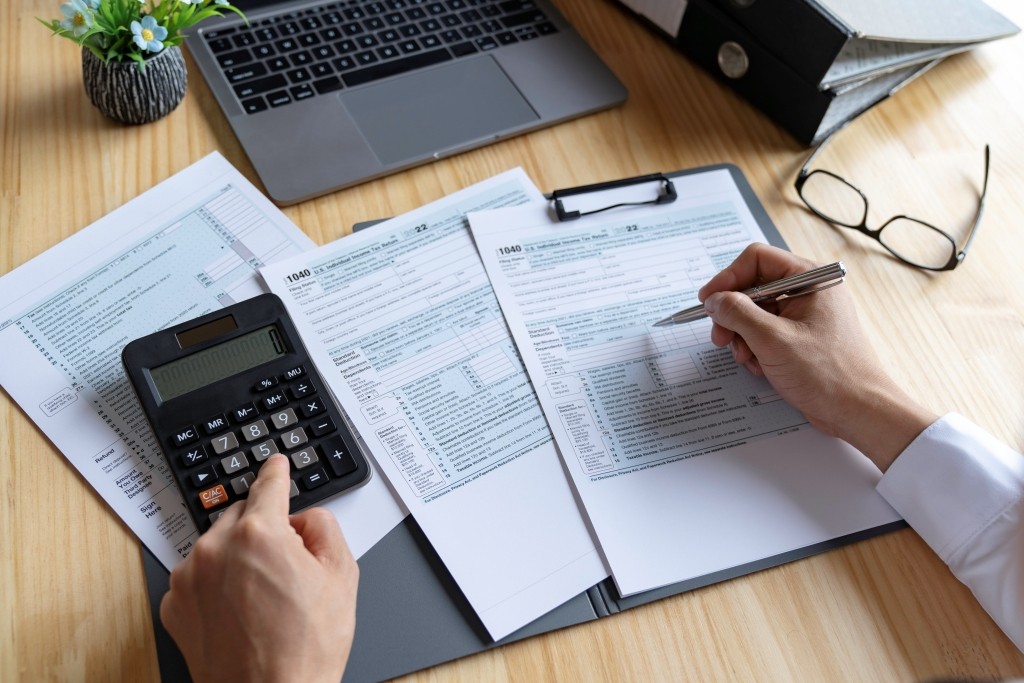
GST penalties stack up faster than most people expect, and they apply even when no tax is owed.
A GST-registered business must file Form F5 within 1 month of the end of each accounting period, and a nil return is still required if there were no transactions in that period. Miss it and IRAS imposes a S$200 late submission penalty immediately, plus a further S$200 for each completed month the return stays outstanding, up to S$10,000 per return.
Late payment of the GST itself attracts a 5% penalty, and if the tax is still unpaid 60 days after that, a further 2% is added for each completed month it stays outstanding, up to a maximum of 50%. If you are weighing up whether registration even applies to you yet, our GST registration guide sets out the thresholds and timing.
Mistake 6: Weak records and outdated contact details
Two quiet habits cause more trouble than they should.
The first is poor record-keeping. IRAS requires you to keep proper records and supporting documents for at least 5 years, and without them, you cannot defend a claim or reconstruct a figure if you are queried.
The second is letting your contact details go stale. If IRAS sends a filing reminder or a Notice of Assessment to an old address or email, you can miss a deadline you never knew was approaching. Update your particulars through myTax Portal, and keep your registered details current with ACRA if you run a company.
What IRAS penalties actually cost
It helps to see the numbers side by side. The table below summarises the main consequences of filing or paying late.
| Default | Consequence |
|---|---|
| Late or non-filing of income tax return | Estimated Notice of Assessment, plus a composition amount up to S$5,000; possible court summons |
| Late payment of income tax | 5% penalty; if still unpaid 60 days later, an additional 1% for each completed month, up to a further 12% |
| Late or non-filing of GST return | S$200 immediately, plus S$200 for each month outstanding, capped at S$10,000 per return |
| Late payment of GST | 5% penalty; if still unpaid 60 days later, an additional 2% for each completed month, capped at 50% |
| Company returns not filed for 2 or more years | On conviction, double the tax assessed, plus a fine of up to S$5,000 per offence |
Composition amounts vary with your past compliance record, so a first slip is treated more leniently than a repeat one. The figures above reflect IRAS’s published penalty framework as of 2026 and should be confirmed against the latest IRAS guidance for your specific situation.
Your pre-filing checklist
Run through this short list before you submit anything, whether you file for yourself or for a company:
- Confirm which deadline applies and diarise it the moment the season opens.
- Declare every source of income, not only what is auto-included.
- Claim only the reliefs and deductions you can support with documents.
- For companies, file ECI within 3 months of your financial year-end.
- Keep business and personal expenses and bank accounts fully separate.
- File GST returns on time, including nil returns.
- Keep records for at least 5 years and keep your contact details current.
None of these mistakes requires a tax expert to avoid, but they do require attention at the right moments in the year. When the filings pile up, or when a company’s ECI, corporate tax return, and GST cycle start to overlap, the cost of one missed date usually outweighs the cost of getting help. If you would rather hand the deadlines to a team that tracks them for you, Entrust’s corporate secretarial and compliance services keep your statutory and tax obligations on schedule, so a penalty never starts with a date you forgot.